Privacy in Decentralized Identity: How Blockchain Protects Your Data
Discover how decentralized identity uses blockchain and zero-knowledge proofs to give you control over your data, eliminating single points of failure and enhancing privacy.
When you send crypto, you don’t want everyone to see how much you have, who you paid, or why. That’s where zero-knowledge proofs, a cryptographic method that lets one party prove to another that a statement is true without revealing any information beyond the fact that it’s true. Also known as ZKPs, they’re the quiet engine behind private transactions on blockchains like Zcash and Ethereum’s scaling layers. Think of it like proving you’re over 21 without showing your ID—you just say ‘yes’ and the system believes you because the math checks out.
Zero-knowledge proofs don’t just hide amounts—they make entire networks faster. Projects like zk-Rollups, a Layer 2 scaling solution that bundles hundreds of transactions into a single proof verified on the main blockchain use ZKPs to cut Ethereum fees and speed up trades. Meanwhile, zk-SNARKs, a specific type of zero-knowledge proof used in Zcash and other privacy-focused chains let users send fully anonymous transactions without relying on trusted third parties. These aren’t theoretical ideas—they’re running right now, securing billions in value.
What you’ll find in this collection isn’t hype. It’s real cases where privacy tech intersects with crypto’s biggest problems: fake airdrops, scam tokens, and exchanges hiding risky behavior. Some posts expose projects pretending to use zero-knowledge tech to sound legit—when they’re doing nothing of the sort. Others show how real ZKPs are used to protect users in places like Iran and Russia, where banking bans force people to rely on crypto that can’t be traced. You’ll also see how exchanges prevent double-spending using similar cryptographic logic, and why some tokens vanish because they can’t even prove they exist—let alone protect your data.
Zero-knowledge proofs aren’t magic. They’re math. And the people who understand them aren’t just building better crypto—they’re building trust in a world full of lies. If you’ve ever wondered why some coins feel safer, or why certain platforms don’t leak your info, this is where the answer lives.

Discover how decentralized identity uses blockchain and zero-knowledge proofs to give you control over your data, eliminating single points of failure and enhancing privacy.
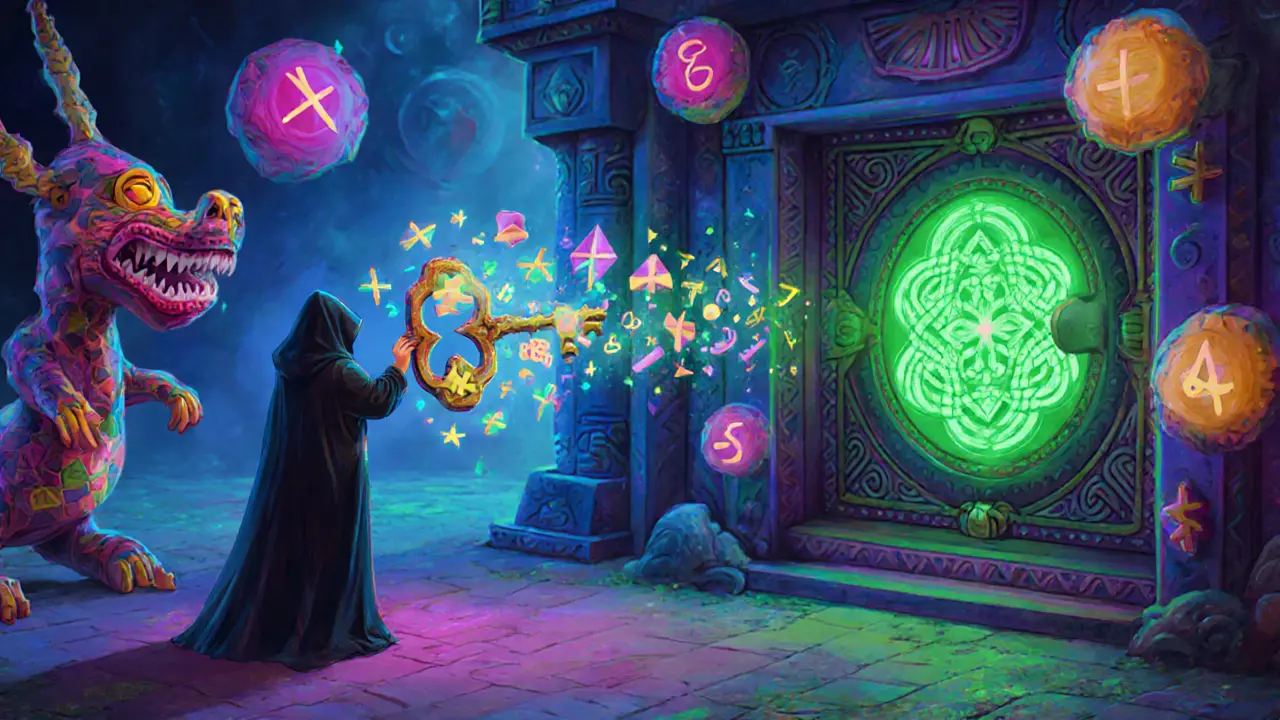
Zero-knowledge proofs let blockchains verify transactions without revealing details. Learn the math behind zk-SNARKs, zk-STARKs, and how they enable privacy and scalability in crypto.