Sustainable vs Unsustainable Yield Farming in Blockchain
Learn how to tell the difference between sustainable and unsustainable yield farming in DeFi. Discover which protocols earn real revenue-and which are just printing tokens to attract users.
When you see a DeFi protocol offering 1,000% APY for staking a token no one’s heard of, that’s not innovation—it’s a countdown. Unsustainable yield farming, a practice where crypto projects promise unrealistically high returns to attract liquidity, often without real revenue or long-term economic design. Also known as high APY scams, it’s the digital equivalent of a pyramid scheme dressed up as decentralized finance. These projects don’t build products—they build hype. They burn through user funds paying out rewards borrowed from new deposits, not from actual trading volume or fees. When the new money dries up, the yield vanishes, and the token drops to near zero. No warning. No refund.
This isn’t theoretical. Look at the posts below: Battle Hero II chest NFT airdrop, a project that promised $50,000 in rewards but disappeared without a trace. Or HERO airdrop by FarmHero, a token that shut down years ago but still has fake websites tricking people into connecting wallets. Even CHY airdrop by Concern Poverty Chain, which claimed to fight poverty with free tokens but had zero market activity. These aren’t outliers—they’re the rule. The same pattern repeats: flashy marketing, fake TVL numbers, and a team that disappears after the first big payout.
What makes these schemes dangerous isn’t just the lost money—it’s the trust they break. People see a 500% APY and assume it’s normal. They don’t ask: Where’s the revenue? Who’s backing this? What happens when the initial investors cash out? The answer is always the same: nothing. The protocol has no income stream. It’s just a distribution engine powered by new users. And once the hype fades, the whole thing collapses. You’re not investing—you’re gambling on who’s next to deposit.
Real DeFi earns rewards from trading fees, lending interest, or protocol governance. Unsustainable yield farming? It’s a magic trick. The coin disappears, the wallet address goes dark, and the only thing left is a blockchain record of your loss. The posts below show you exactly how these scams operate, which projects vanished, and how to spot the next one before you lose your funds. You won’t find a guide to getting rich here. You’ll find the truth about why most of these rewards are designed to fail.
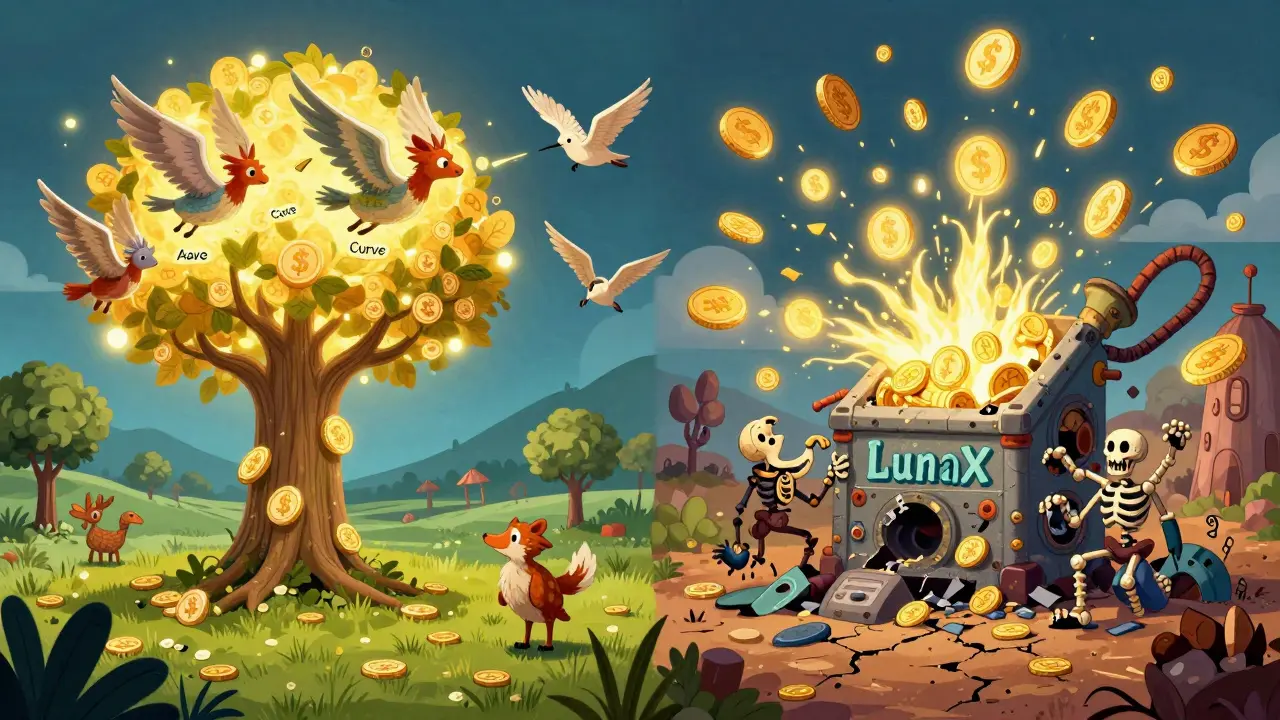
Learn how to tell the difference between sustainable and unsustainable yield farming in DeFi. Discover which protocols earn real revenue-and which are just printing tokens to attract users.