1% TDS on Crypto Transactions in India: What You Need to Know in 2025
India's 1% TDS on crypto transactions deducts tax at the time of trade, not on profits. Understand thresholds, crypto-to-crypto rules, GST叠加, and how to stay compliant in 2025.
When you trade cryptocurrency, a crypto TDS threshold, the minimum trade value that triggers tax deduction at source can quietly take a cut from your profits—often without you noticing. It’s not a fee you pay to an exchange; it’s a government-mandated tax withheld before you even see your coins. Countries like India, where this rule is active, require exchanges to deduct 1% of the trade value if you exceed the annual TDS threshold. This isn’t optional. It’s automatic. And if you’re trading on regulated platforms, you’re already subject to it—whether you realize it or not.
The crypto taxation, the legal requirement to report and pay taxes on digital asset gains system isn’t just about income. It’s about tracking every trade, every swap, every conversion. Even if you trade Bitcoin for Ethereum, that’s a taxable event. The TDS on crypto, the automatic tax deduction applied by exchanges when trading exceeds a set value is the first line of enforcement. It’s designed to catch traders before they forget to file. And it’s working. In places like India, exchanges now report every trade over ₹50,000 in a year to tax authorities. That’s not a suggestion. That’s a legal requirement tied to your KYC details.
What does this mean for you? If you’re doing small, occasional trades under the threshold, you’re probably fine. But if you’re swapping tokens weekly, using multiple exchanges, or trading high-value assets, you’re walking into a compliance minefield. The crypto compliance, the set of rules and reporting obligations that traders must follow to avoid penalties isn’t just about filing a form once a year. It’s about keeping records of every transaction date, amount, and value in fiat at the time of trade. Missing one record can trigger an audit. And audits don’t care if you thought you were "just swapping"—the tax office sees a capital gain.
Some people think using a non-KYC exchange lets them avoid TDS. It doesn’t. It just moves the burden to you. You still owe the tax. You just have to calculate it yourself, track every trade across platforms, and pay it out of pocket. No one’s going to remind you. No one’s going to withhold it for you. And if you get caught later, penalties can add up fast.
What you’ll find in the posts below aren’t guides on how to dodge TDS. Those don’t exist. What you’ll find are real-world breakdowns of how crypto taxation works in practice—from how MiCA regulations in Cyprus change reporting rules, to how Indonesia’s 0.21% tax impacts daily traders, to why a dead token like FLY still has tax implications if you ever bought it. You’ll see how exchanges like KoinBX and GroveX handle tax withholding, how regulators track wallets, and why even meme coins like BIGDOG aren’t exempt. This isn’t theory. It’s what’s happening right now, in 2025, to real people trading crypto. The TDS threshold isn’t going away. Understanding it is the only way to trade smart, not sorry.
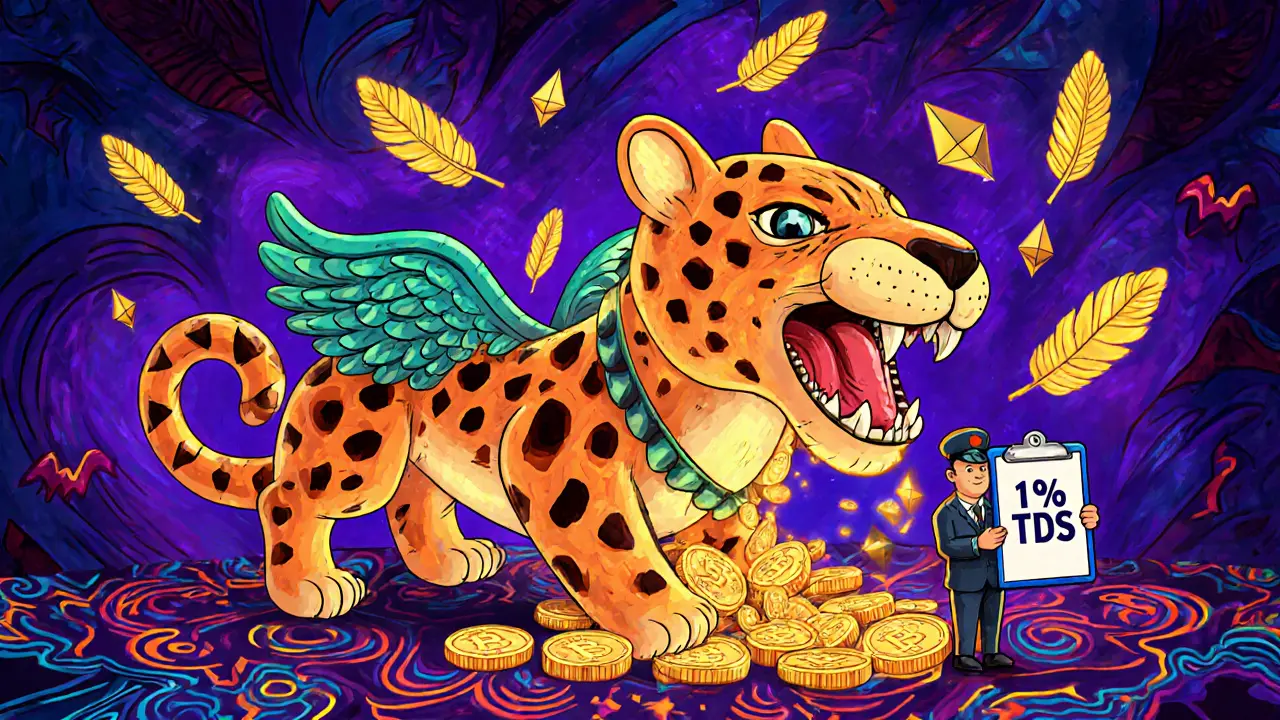
India's 1% TDS on crypto transactions deducts tax at the time of trade, not on profits. Understand thresholds, crypto-to-crypto rules, GST叠加, and how to stay compliant in 2025.