Anonverse X CMC Airdrop: What We Know (and What We Don’t)
There is no verified Anonverse X CMC airdrop as of November 2025. Learn why this claim is a scam, how to spot fake crypto airdrops, and what real airdrops look like in 2025.
When you hear CMC airdrop, a free token distribution event hosted or listed by CoinMarketCap to promote new crypto projects. Also known as CoinMarketCap airdrop, it's a way for startups to give away tokens to users who complete simple tasks like following social accounts or holding a specific coin. But here’s the catch — most of them don’t pay out. CoinMarketCap doesn’t run these themselves. They just list them. That means anyone can submit a project, and if it looks shiny enough, it gets tagged as an "airdrop" on their site. You’re not getting a free lunch — you’re walking into a minefield of fake campaigns, abandoned tokens, and outright scams.
Real CMC airdrop, a free token distribution event hosted or listed by CoinMarketCap to promote new crypto projects. Also known as CoinMarketCap airdrop, it's a way for startups to give away tokens to users who complete simple tasks like following social accounts or holding a specific coin. events like the FLUX token, a cryptocurrency tied to the Flux Protocol that distributed 10,000 tokens via CoinMarketCap in October 2025 actually delivered value. People got real tokens they could trade. But look closer at the others — TRO airdrop, a claimed token distribution from the now-defunct Trodl project that never existed, HERO airdrop, a token from FarmHero that shut down years ago but still has fake websites pretending to give it away, or CHY airdrop, a token tied to a "charity" blockchain with zero market activity and a $0 price. These aren’t mistakes. They’re designed to trick you into giving up your wallet info, your time, or your trust.
Why do people fall for this? Because the promise is simple: free money. But crypto airdrops aren’t charity. They’re marketing. Legit ones require you to hold a token, join a community, or use a wallet you already own. Scams ask for your seed phrase, your private key, or payment to "unlock" your free tokens. If it sounds too good to be true, it is. And CoinMarketCap doesn’t verify these — they just list them. That’s why you need to dig deeper. Check if the project has active GitHub commits. Look at the token’s trading volume. See if anyone actually received the tokens in the past. Don’t trust a badge. Trust data.
What you’ll find below isn’t a list of free coins. It’s a forensic breakdown of what actually happened with every major CMC airdrop that made noise. Some worked. Most didn’t. And the ones that didn’t? They left behind a trail of broken promises, stolen wallets, and confused users. This isn’t about hype. It’s about survival in a space where the only thing more dangerous than a bad investment is a fake airdrop that feels real.
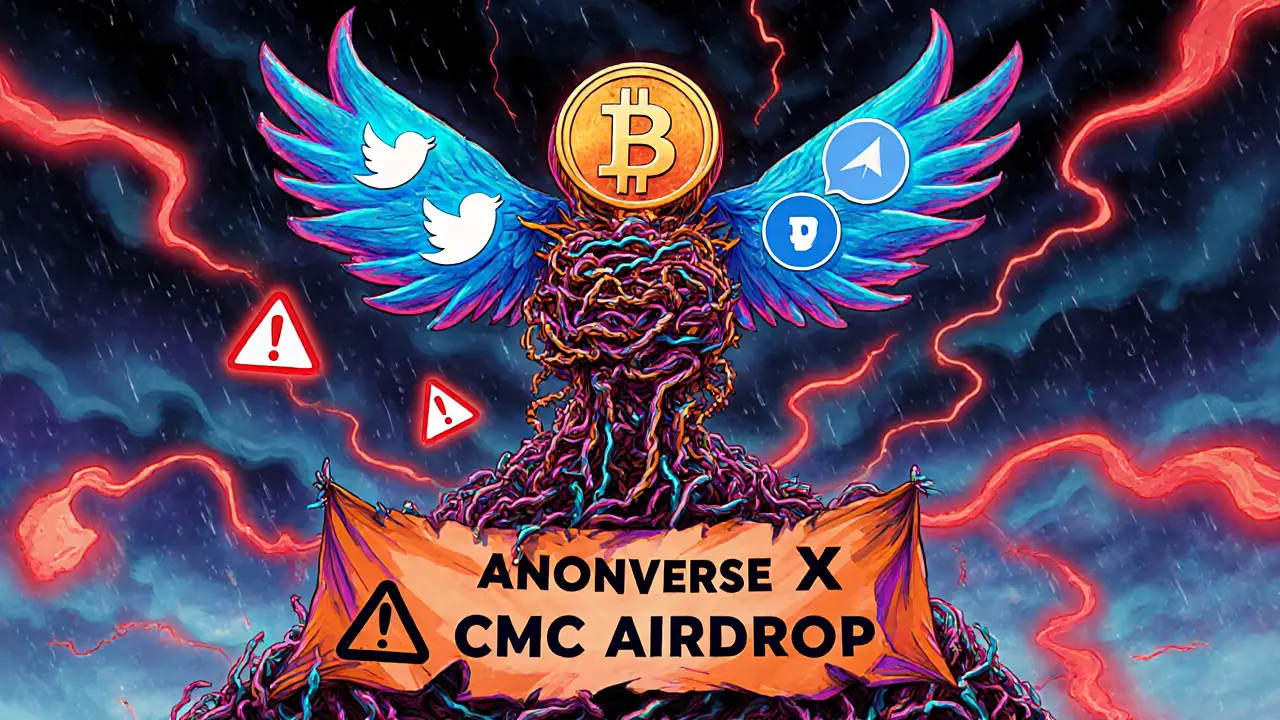
There is no verified Anonverse X CMC airdrop as of November 2025. Learn why this claim is a scam, how to spot fake crypto airdrops, and what real airdrops look like in 2025.